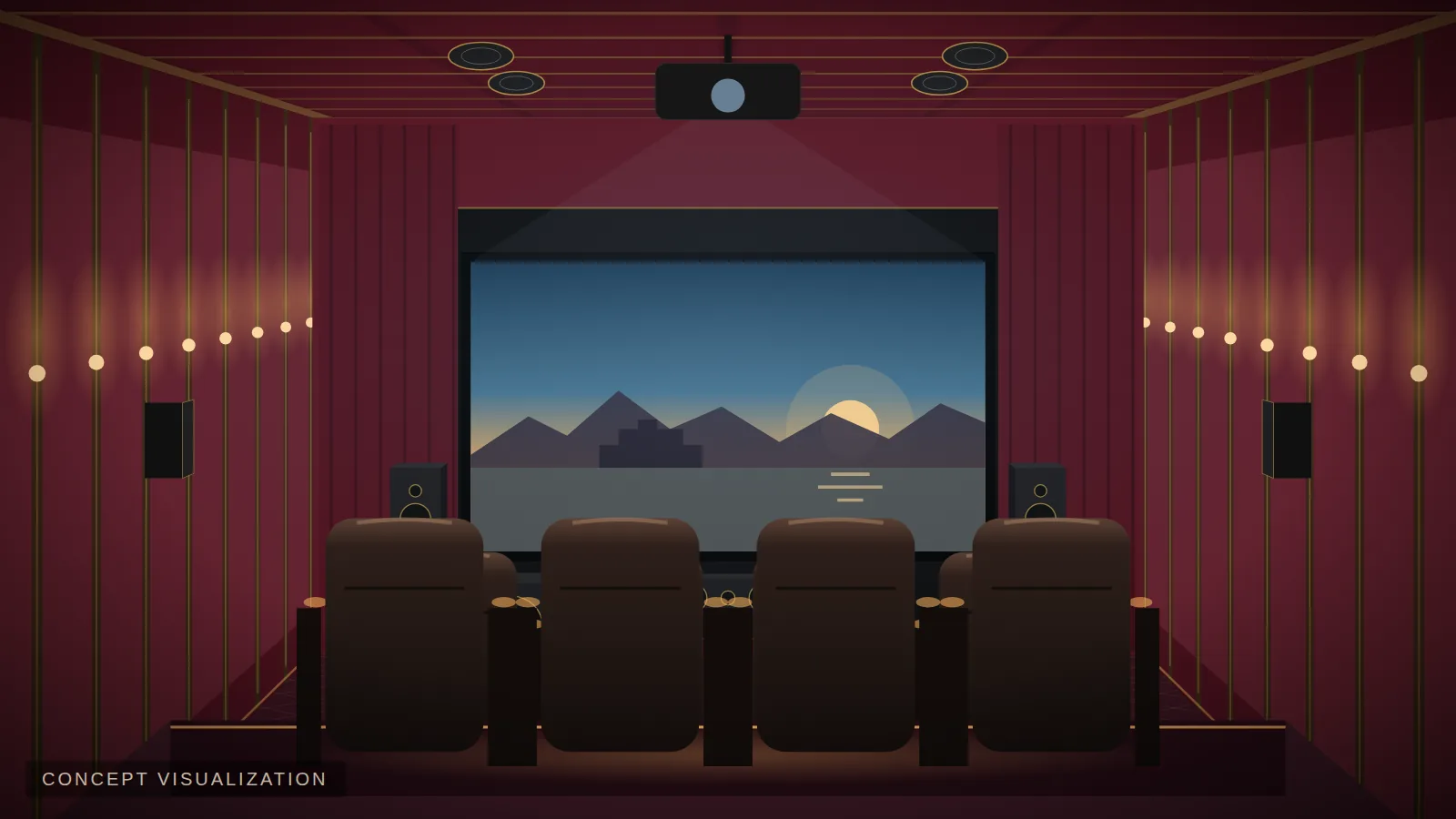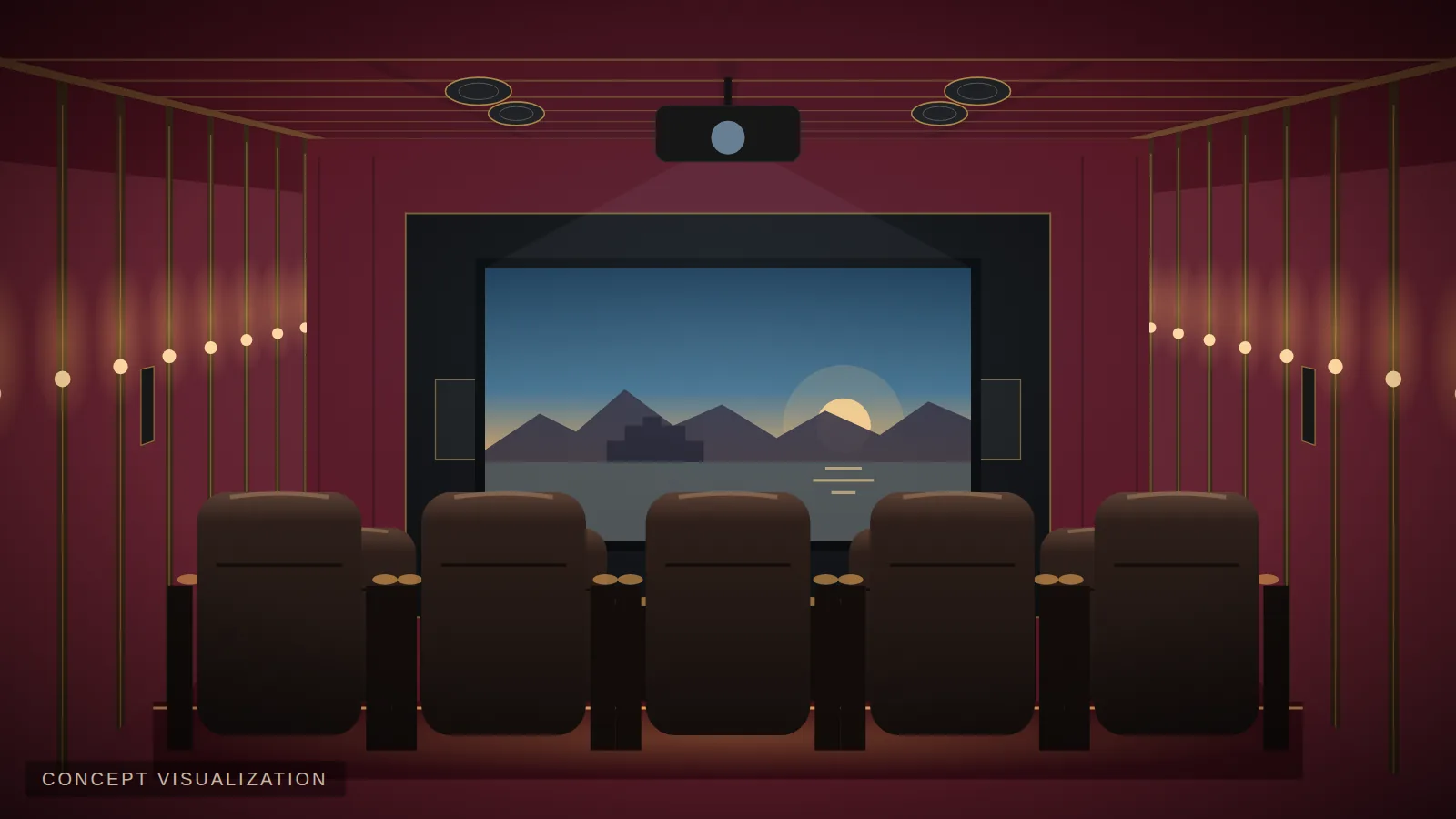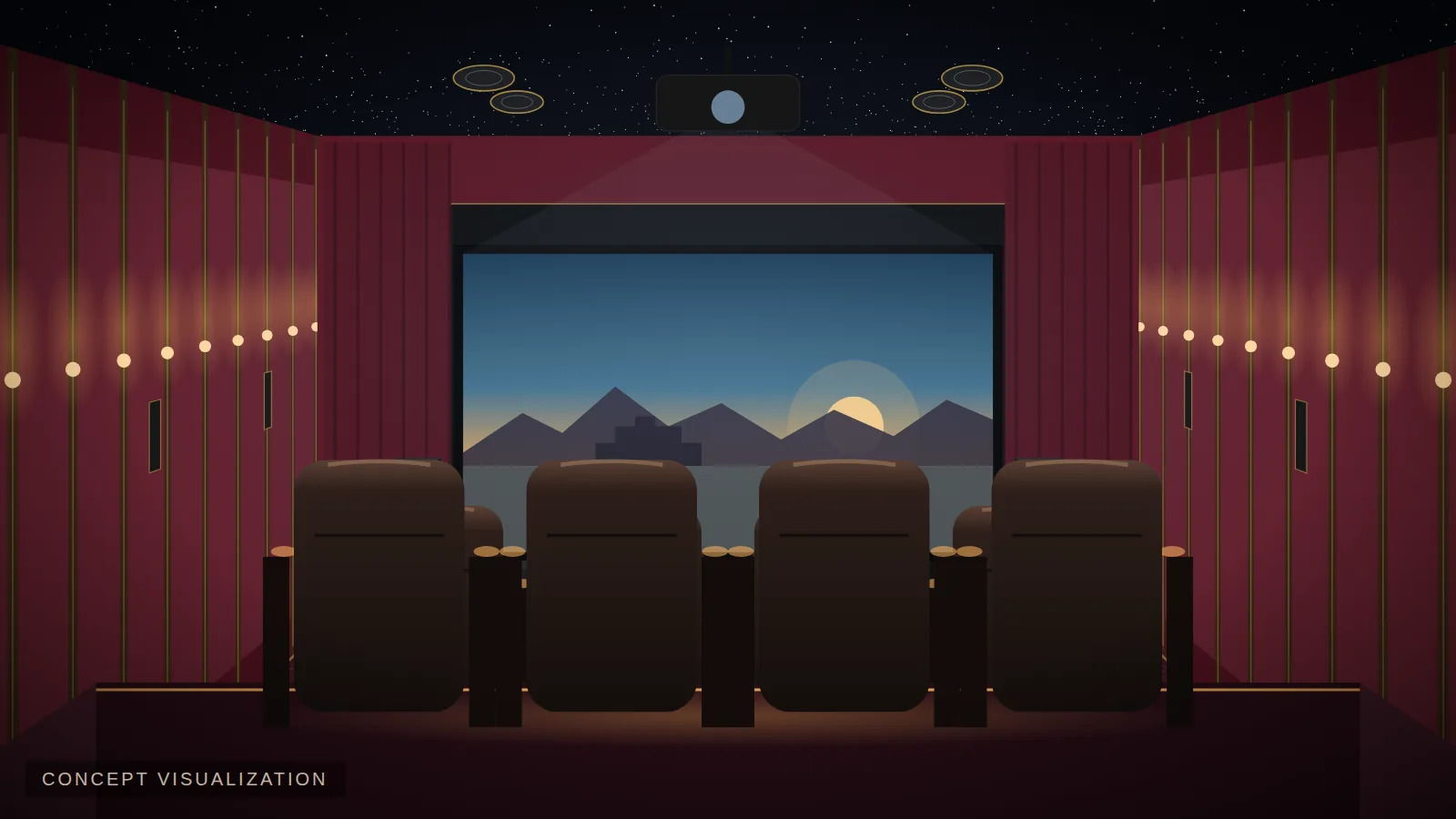
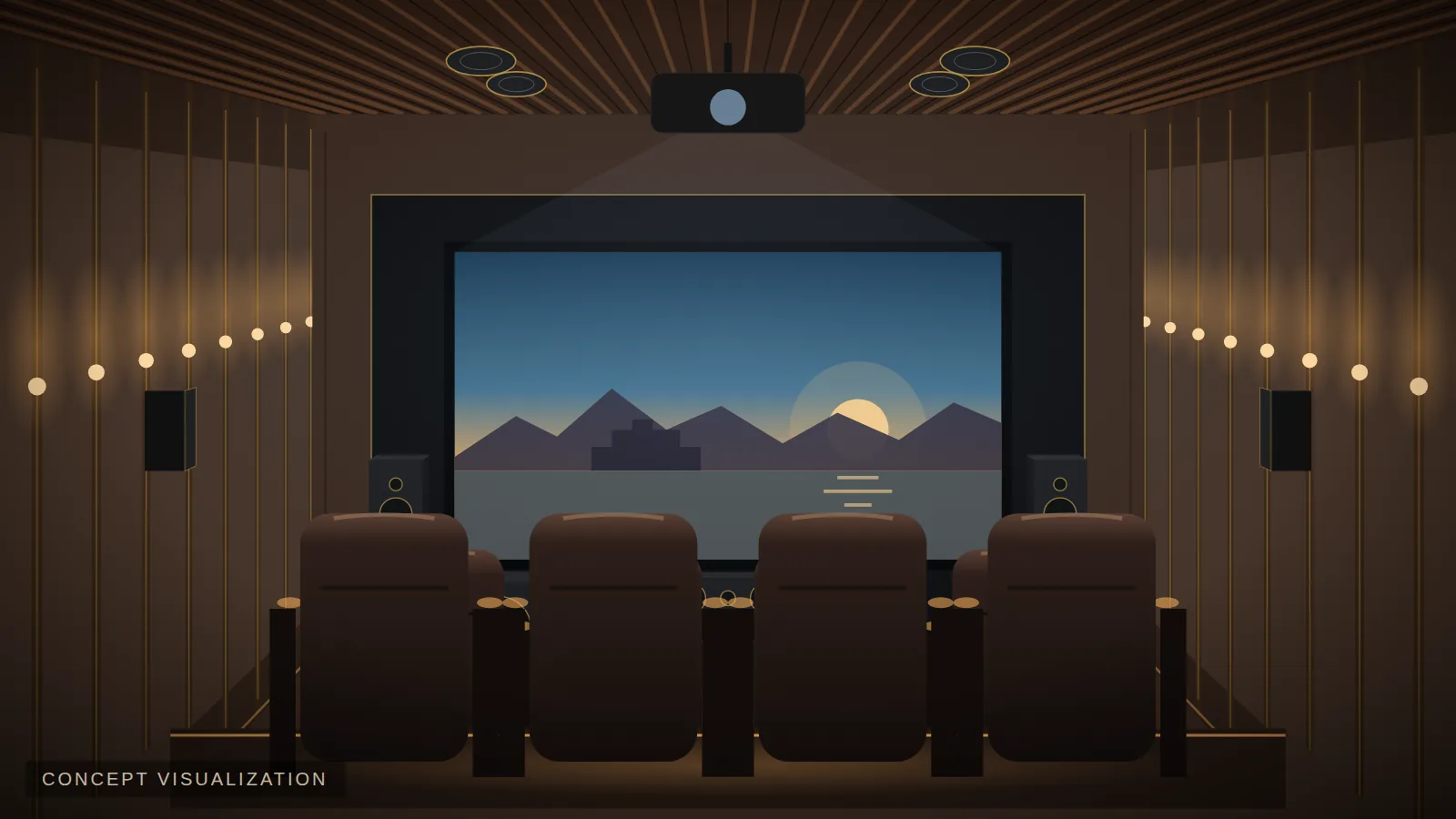
 Concept visualization
Lighting creates the cinema atmosphere — and, done wrong, ruins the picture. Here's how to design it.
The golden rule: no light on the screen
Every light in the room should be positioned and shielded so it doesn't spill onto the screen or reflect into viewers' eyes. Dark, matte surfaces around the screen help.
Layers of light
- Cove lighting in the ceiling for a soft general glow before and after the film.
- Wall sconces for a classic cinema feel — warm, indirect, dimmable.
- Step and aisle lights on risers for safety during the film.
- Star ceiling — a feature layer that can stay on at a low level.
- Accent lighting for poster frames, columns or a bar counter.
- Task lighting for cleaning and maintenance — bright, but on its own scene.
Colour temperature
Warm white (around 2700–3000K) feels cinematic and relaxing. RGB lighting can add drama but should be used subtly and turned down during the film.
Scenes, not switches
Program lighting into scenes: Welcome, Movie (lights fade as the film starts), Intermission (gentle rise), and Cleaning. See automation ideas.
Practical details
- Use flicker-free, dimmable drivers.
- Avoid downlights directly above seats (glare when reclined).
- Plan wiring and drivers accessibly for future maintenance.
See lighting in our cinema designs, or add Lighting Automation in the final step of the Cinema Designer.
Plan your cinema with EVORA
See what fits your room in minutes — screen size, seating, speaker layout, acoustics and a preliminary budget.