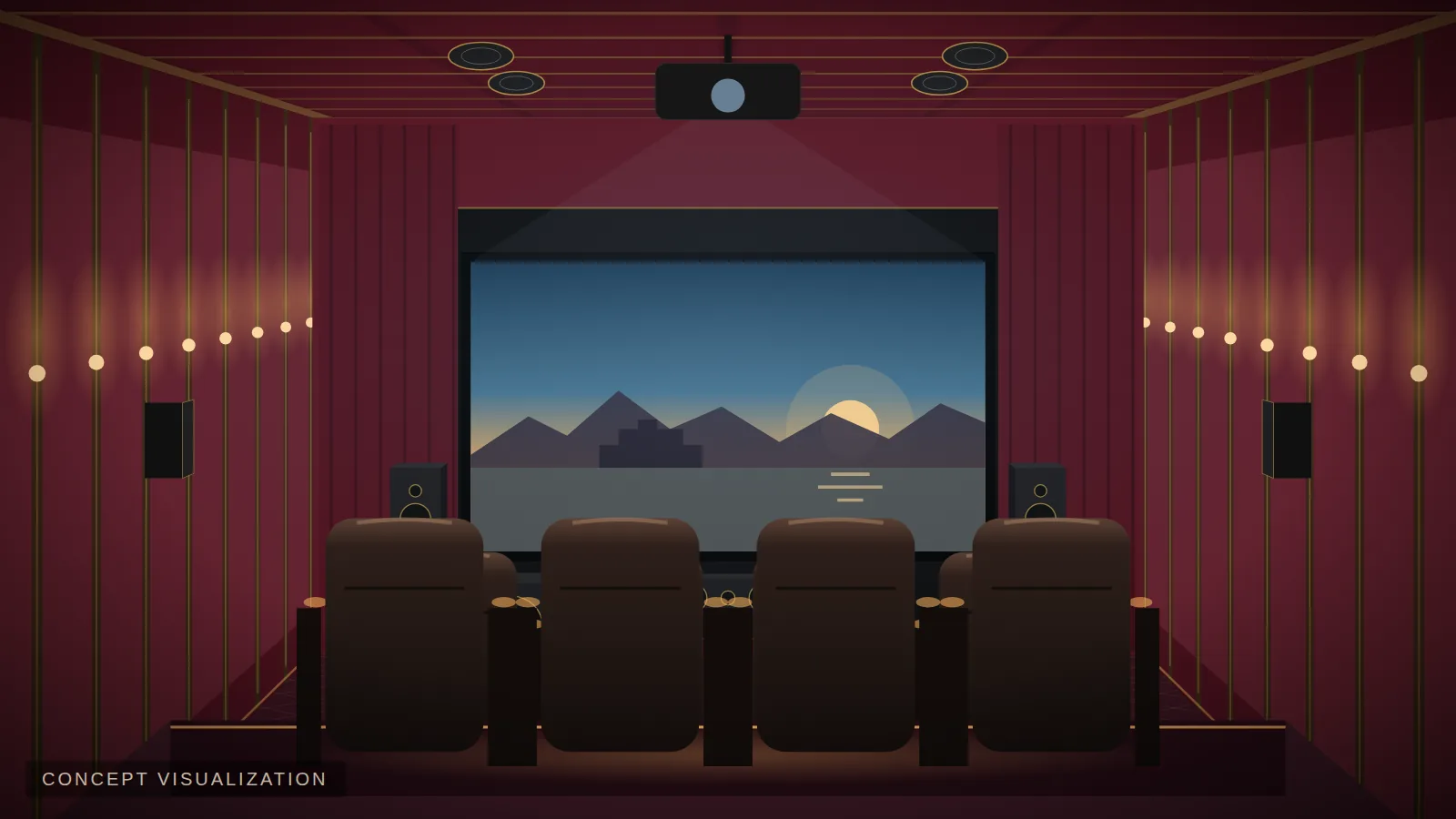
 Concept visualization
Carpet is one of the simplest ways to improve a cinema's sound and atmosphere — especially in Rajasthan homes with marble and stone floors.
Why carpet matters acoustically
Hard floors reflect sound between the floor and ceiling, creating echoes and harshness. Carpet with a good underlay absorbs mid and high frequencies, reduces footfall noise and makes the room feel calmer. It does not replace wall treatment or bass traps, but it's a vital part of the system.
Choosing colour
Darker carpets reduce light reflected from the screen back into the room. Popular choices:
- Black / charcoal — modern, maximum contrast.
- Burgundy / wine — the classic cinema look, warm and luxurious.
- Navy — calm and elegant, lovely with star ceilings.
- Brown / grey — pairs with wooden interiors and practical for families.
Patterned carpets — geometric or classic cinema motifs — hide wear and add character.
Pile and construction
A medium-density cut pile or loop pile works well. Very thick shag can trap dust; very thin commercial carpet looks and sounds cheap. Choose a quality underlay (felt or foam) for comfort and absorption.
Practical tips
- Choose stain-resistant, low-shedding materials for family use.
- Plan transitions and step nosings for risers — with LED step lights.
- In humid places like Mount Abu, choose moisture-tolerant materials and plan dehumidification.
Try carpet colours in the Cinema Designer (step 8) — the concept updates instantly. More on the whole room: how to design a home theater room.
Plan your cinema with EVORA
See what fits your room in minutes — screen size, seating, speaker layout, acoustics and a preliminary budget.