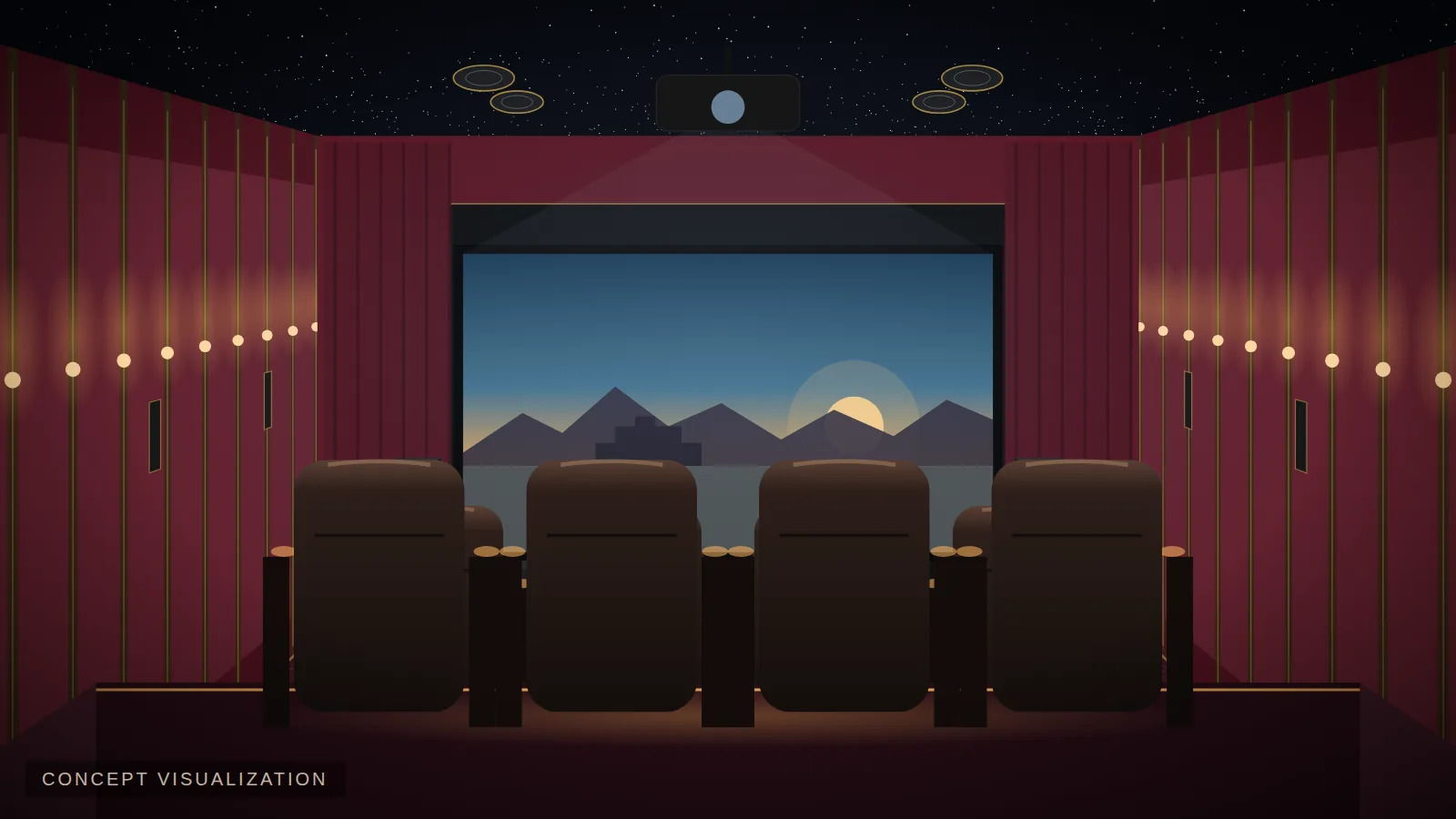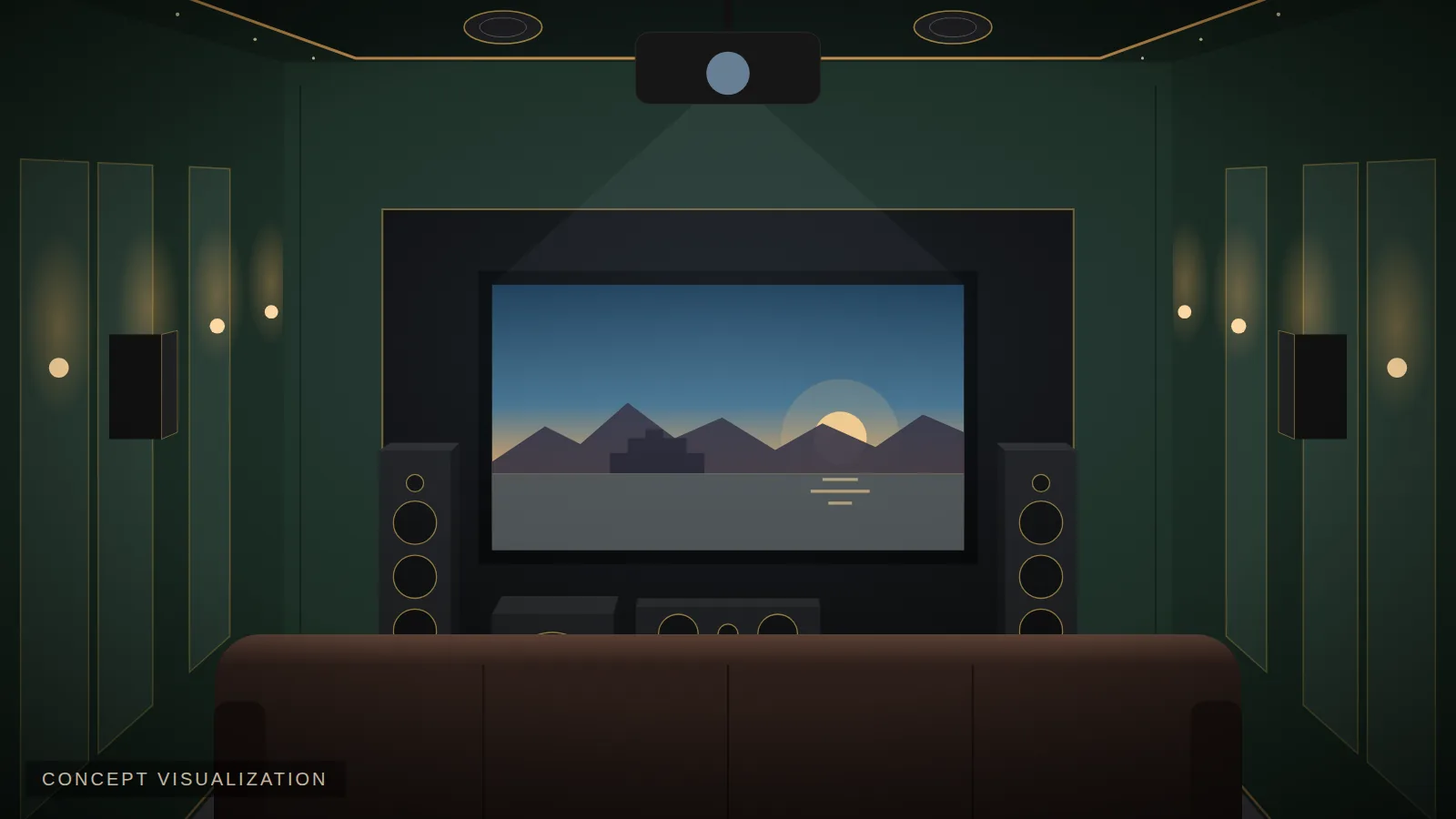
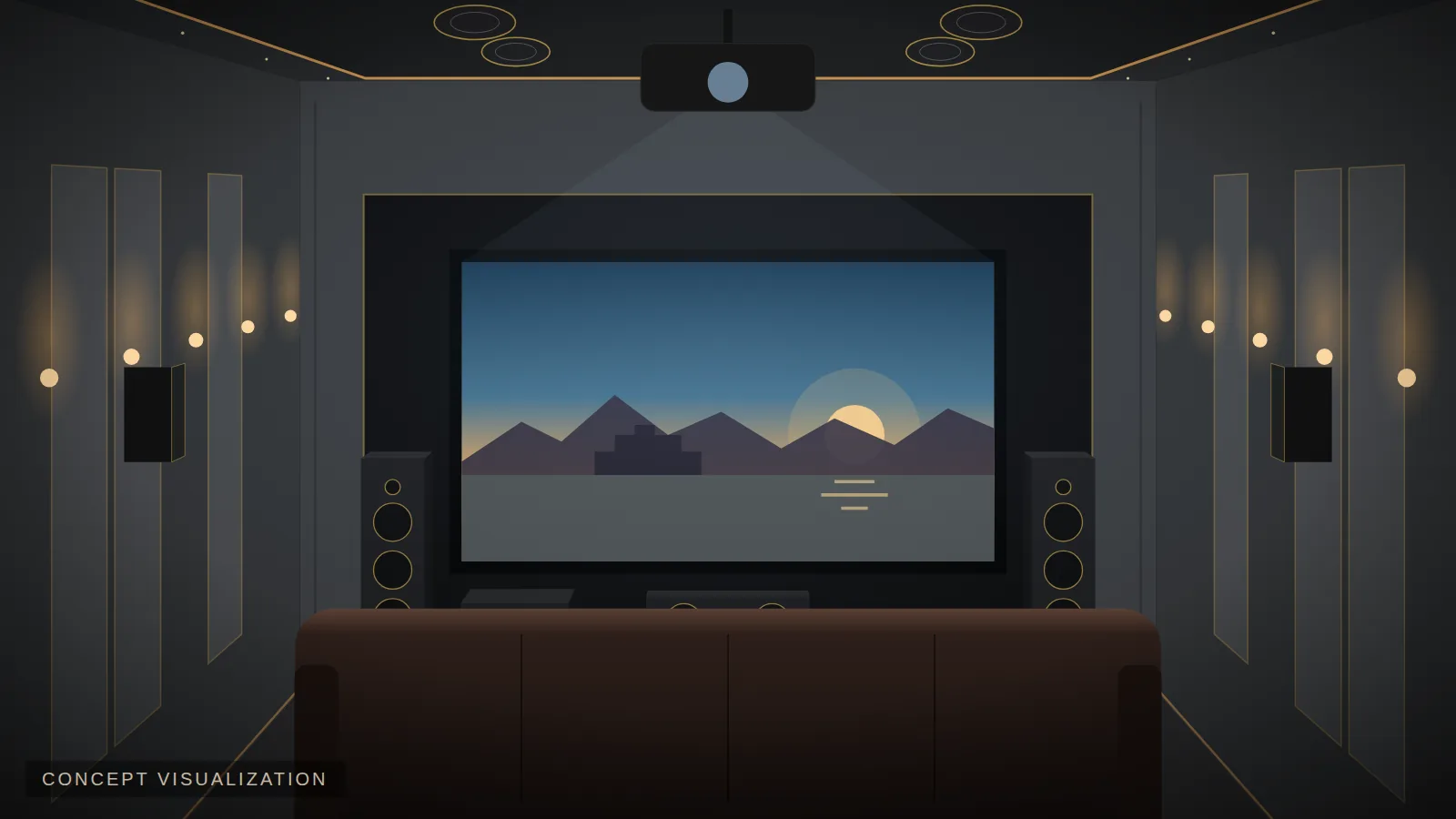
 Concept visualization
The best screen size is the one that fills your view comfortably from your seat — immersive without making you turn your head. Here's how to calculate it.
Use viewing angle, not guesswork
Common guidelines target a horizontal viewing angle of about 30° (comfortable) to 40° (immersive) from the main seat.
- Screen width ≈ 0.54 × viewing distance (30°)
- Screen width ≈ 0.73 × viewing distance (40°)
For a 16:9 screen, diagonal ≈ width ÷ 0.87.
Quick table (16:9)
| Main seat distance | Comfortable | Immersive |
|---|---|---|
| 9 ft | ≈ 80" | ≈ 90" |
| 11 ft | ≈ 95" | ≈ 110" |
| 12.5 ft | ≈ 105" | ≈ 125" |
| 14 ft | ≈ 120" | ≈ 140" |
Other limits
- Room width: leave space for speakers or curtains beside the screen.
- Room height: the bottom of the screen should clear heads in front (important with multiple rows); the top shouldn't be too high.
- Projector brightness: bigger screens need brighter projectors, especially in rooms that aren't fully dark.
16:9 or 2.35:1 scope?
Most TV and streaming content is 16:9; many films are wider "scope". A scope screen gives the true cinema look but needs a projector with lens memory or an anamorphic setup. 16:9 is the simpler default.
Screen types
Fixed-frame screens are flat and best for dedicated rooms. Motorised screens suit media rooms. Acoustically transparent screens let front speakers sit behind the image for perfect alignment. Ambient-light-rejecting screens help in rooms with some light.
The Room Planner suggests a screen range for your room instantly, and the Cinema Designer includes screen and projector category guidance in your report. Also read projector vs large TV.
Plan your cinema with EVORA
See what fits your room in minutes — screen size, seating, speaker layout, acoustics and a preliminary budget.