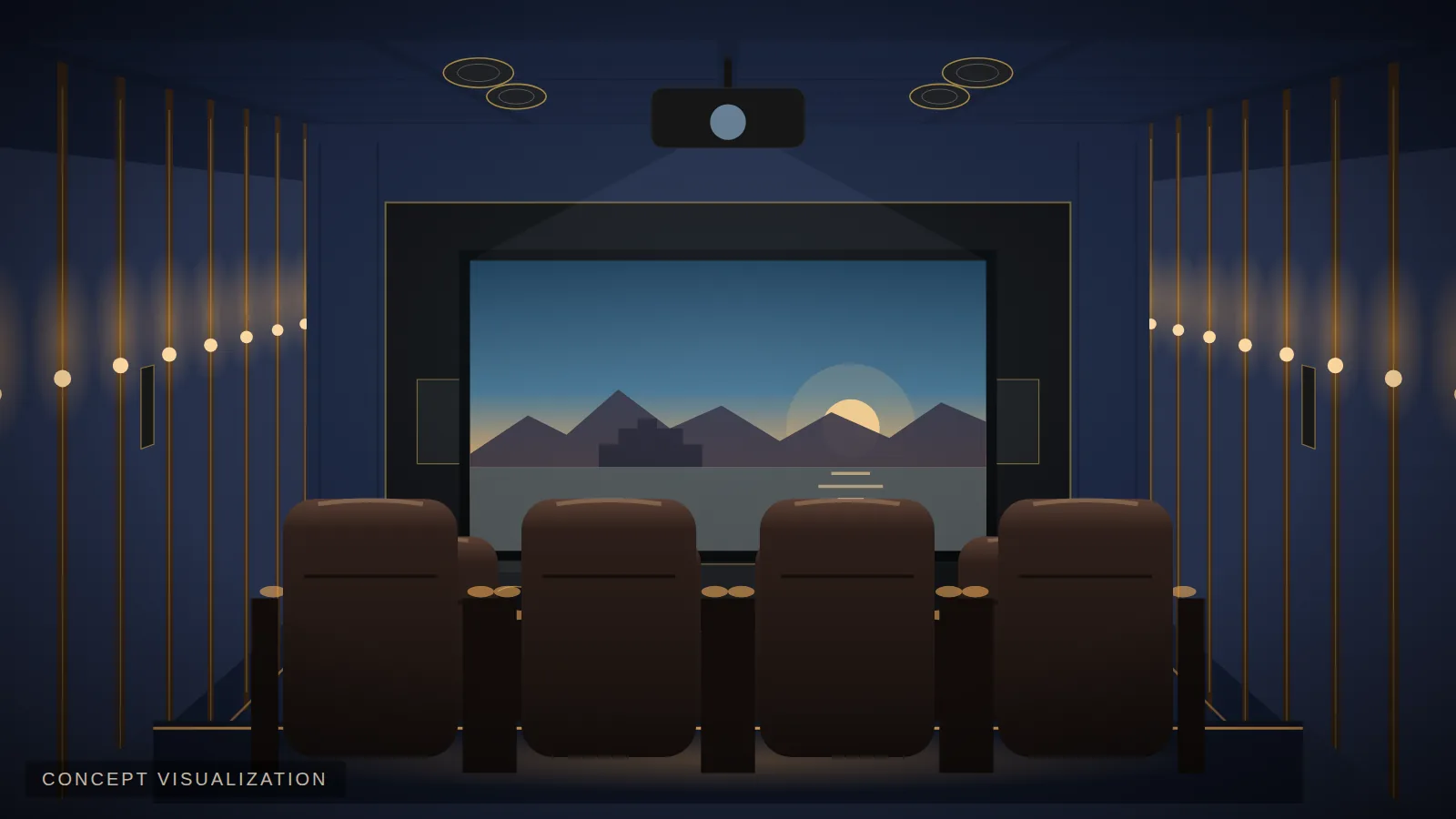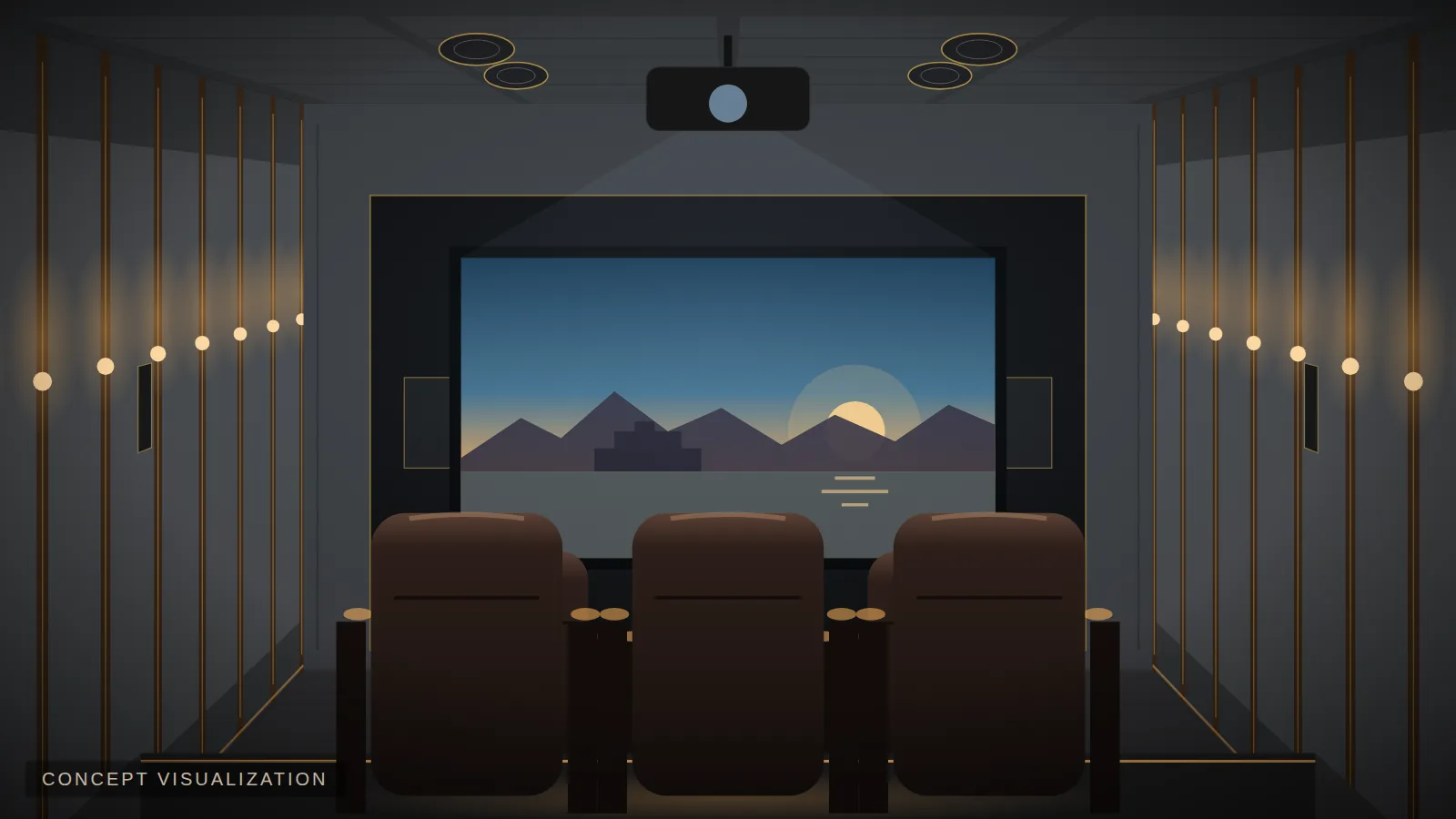
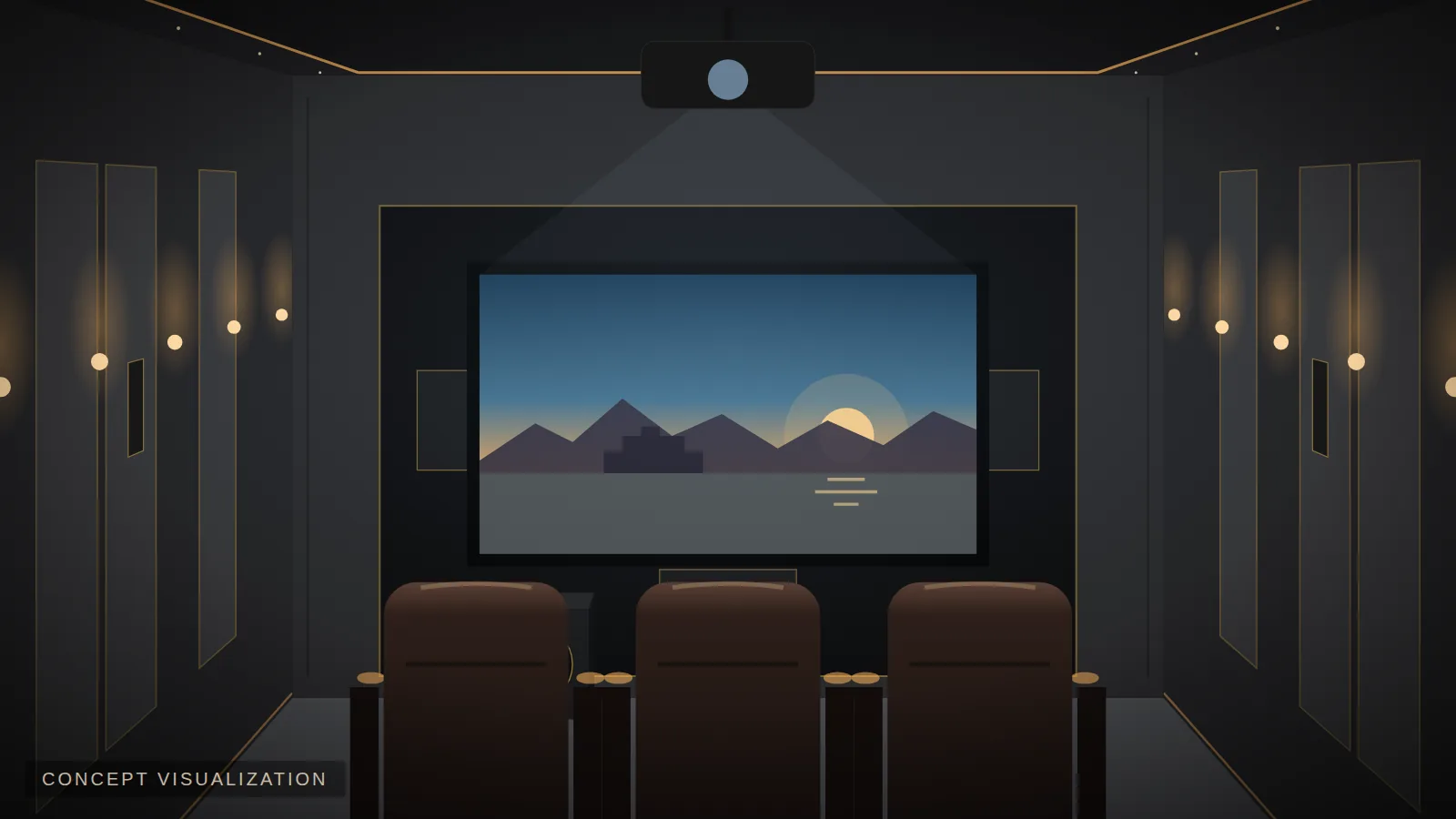
 Concept visualization
Both can sound superb. The right choice depends on your room, your interiors and how much you want the technology to disappear.
In-wall and in-ceiling speakers
Pros: clean architectural look; speakers hidden behind grilles or acoustic fabric; no floor space used; ideal for immersive height channels; easier to keep consistent sound across front speakers when placed behind an acoustically transparent screen.
Considerations: must be planned before finishing walls; performance depends on back-box and wall construction; upgrades mean opening walls or grilles.
Floor-standing speakers
Pros: classic premium look; strong full-range performance; easy to position and upgrade; no wall construction needed.
Considerations: need floor space beside the screen (reducing screen width in narrow rooms); visible cables and cabinets; less suited to minimal interiors.
Hybrid designs
Many EVORA cinemas combine floor-standing front speakers with in-wall surrounds and in-ceiling height speakers — performance up front, clean walls elsewhere.
How to decide
| If you want… | Choose |
|---|---|
| A seamless, architectural cinema | In-wall / in-ceiling |
| Visible hi-fi presence, easy upgrades | Floor-standing |
| Best of both | Hybrid |
| Maximum screen width in a narrow room | In-wall (or behind-screen) |
Don't forget the subwoofer
Whichever you choose, deep bass comes from subwoofers — freestanding, in-wall or hidden in cabinetry. Larger rooms benefit from two for even bass.
See both styles in the Cinema Designer (step 3) — the concept changes as you switch. For Udaipur projects, see home theater installation.
Plan your cinema with EVORA
See what fits your room in minutes — screen size, seating, speaker layout, acoustics and a preliminary budget.